Seasonal programs place different demands on a rower than permanent gym use: session length, user turnover, monsoon storage, tournament deadlines and recommissioning all affect the decision. By the end, you will have a practical method for programming sessions, organising groups, checking facility fit and specifying a Freemotion SR-90 before committing to a Pune training block.
Key takeaways
- Match intervals to monsoon, summer, school, club, or tournament schedules.
- Set damper, stroke rate, duration, and rest before each session.
- Stagger groups by work period to prevent queues and maintain supervision.
- Require installation, commissioning, servicing, and spare-parts support from Pune suppliers.
How to use an air rower across a Pune seasonal training block
A four- to twelve-week block should match the calendar and the participant’s starting point: monsoon conditioning can replace outdoor sessions indoors; summer camps need short, repeatable work; school or club blocks build attendance and technique; tournament preparation adds race-paced intervals; short-term gym programming prioritises measurable, low-skill conditioning.
- Weeks 1–2: beginners complete two sessions weekly, each with a 6–10-minute warm-up, 10–15 minutes of easy rowing and a gentle cool-down. Keep a rest or recovery session between harder days.
- Weeks 3–6: add low-rate intervals, such as six rounds of one minute moderate rowing and two minutes easy recovery. For a summer camp or school block, use groups with the same work and recovery clock.
- Weeks 7–12: trained participants can combine structured intervals with 20–40 minutes of steady-state rowing. Tournament preparation can include shorter, faster bouts, while general gym users benefit from one harder session and one aerobic session weekly.
Air resistance rises as flywheel speed and stroke rate rise. Unlike magnetic resistance, the damper does not select a fixed workload; it changes airflow and perceived gearing. Pushing harder still increases the load.
Treat displayed calories and distance as one person’s progress markers, not universal scores. Technique, stroke rate, body size, machine calibration and machine condition prevent direct comparison across users or rowers.
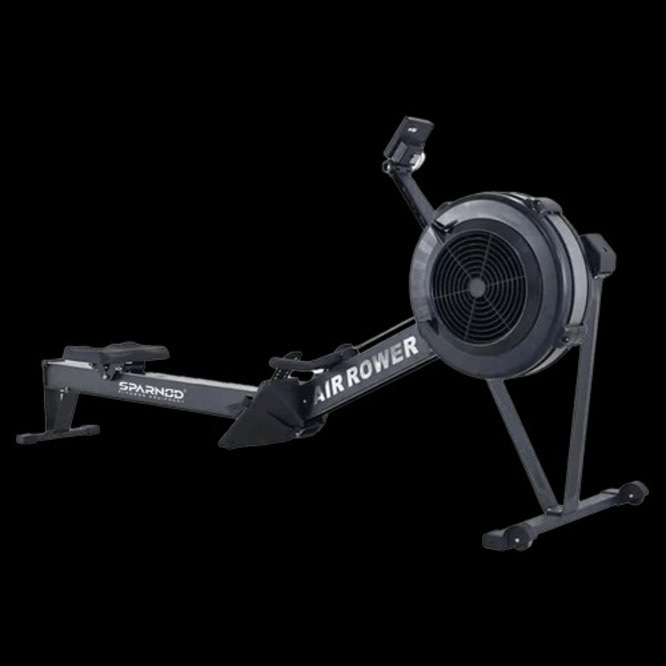
When choosing a freemotion commercial air rower for seasonal training in pune, check the current manual and intended-use documents for the freemotion sr 90 air rower in pune before programming or specifying the unit.
Technique and session prescriptions for different users
Teach the stroke in this order:
1. Set the catch with shins near vertical, heels supported, arms straight and a braced, neutral back. Do not chase extra reach by rounding the lumbar spine.
2. Drive through the legs first, keeping the handle moving with straight arms.
3. Open the hips after the legs have driven, then finish with the handle drawn toward the lower ribs.
4. Recover by extending the arms, hinging the hips forward and bending the knees only after the handle passes them. Control the slide; rushing it destroys the next catch.
A coach must stop early arm pull, a rounded lower back, over-compressed knees and a recovery that races forward. These faults waste leg power and increase back or knee stress.
Use the damper as a technique and pacing tool, not a substitute for effort. A lower setting can support rhythm and technical learning; a higher setting increases the air moved by the flywheel and feels heavier, but it does not make poor effort productive.
Use this structure for an air rower for seasonal gym training:
1. Beginners: warm up 6 to 8 minutes, then complete six 1-minute low-rate technique intervals with 1 minute easy rowing between them. Cool down 5 minutes.
2. School athletes: warm up 8 minutes, then perform 8 to 12 work bouts of 20 to 30 seconds, followed by equal or longer easy recovery.
3. General gym members: combine 3-minute moderate intervals with 2-minute easy rowing, then add 15 to 25 minutes of steady-state work.
4. Trained rowers: use rate-controlled threshold pieces or longer aerobic rows, with an easy recovery session between hard days.
Judge progress by technique, stroke rate and personal effort rather than universal displayed distance or calories.
How to run group sessions without creating queues or losing supervision
Plan capacity from simultaneous work stations, not total membership. If eight rowers serve 24 members, the equipment-to-member ratio is 8:24, or one station per three people; schools, clubs and seasonal gyms then need a rotation plan.
1. Use timed circuits when everyone needs a turn, with rowing intervals separated by mobility or strength stations. Use staggered starts when the coach must watch technique closely, or booked rowing windows when demand exceeds available stations.
2. Keep a coach within clear walking access of every machine. Watch the catch and controlled recovery, set a safe stroke-rate limit, demonstrate safe mounting, and stop anyone showing dizziness, loss of posture, uncontrolled breathing or repeated handle contact with the frame.
3. Log each participant’s time, strokes or perceived effort against their own previous sessions. Do not rank members by console calories, which vary with body size, technique and pacing.
4. Between users, wipe the seat, handle, footrests and other contact surfaces with a method allowed by the manufacturer’s instructions. Keep liquid away from the console, flywheel housing and electrical contacts; dry surfaces before the next booking.
Cap bookings, enforce return times and store the air rower for seasonal gym training in a dry, ventilated area between programs.
5. After idle months, inspect for moisture or corrosion, check fasteners, test seat and handle movement, confirm console or battery operation, run a short unloaded test, then complete a progressive loaded test before the first class. Record operating hours or strokes for future servicing.
Does the rower fit your Pune facility and seasonal environment?
Fit depends on the current SR-90 documents and your room, not a generic listing. For a Freemotion SR 90 air rower in Pune, obtain the model-specific manual or data sheet before approving delivery.
1. Record the stated footprint, machine mass, maximum user weight and required clearances. Do not borrow dimensions from another Freemotion model; an incorrect mass can affect lift planning and floor loading.
2. Measure the complete route, including door openings, lift dimensions, stairwell turns and landing space. Confirm ceiling height, floor load capacity, floor levelness and usable space around the rail before scheduling installation.
3. Assess room ventilation and cooling separately. Flywheel airflow does not remove carbon dioxide, heat or humidity, so a busy monsoon or summer session still needs adequate mechanical ventilation and temperature control.
4. Place rowers away from reception, personal-training zones and quiet stretching areas. Use an anti-vibration mat only to reduce floor-borne vibration; it will not silence flywheel airflow or fix an uneven floor.
5. Keep frames, chains, seat hardware and console contacts away from leaking walls, wet mop water and poorly ventilated storage. Dry equipment before storage and inspect for corrosion after humid months.
6. Control dust around the flywheel intake and guard using the manual-approved method. Never spray liquid into the housing, handle-return mechanism or console.
7. Confirm console requirements before specifying a power outlet, batteries or charging provision. Do not assume the rower’s electrical setup from another model.
What to require from a commercial air rower supplier in Pune
Make the purchase order an acceptance and service brief, not a quote for a machine. A commercial air rower supplier in Pune must demonstrate the unit under load before you approve the seasonal fleet.
1. Inspect rail alignment, seat rollers, handle and chain or strap action, footplate adjustment, frame joints, console readability, fan operation and service access points.
Then row through a loaded test: the seat must travel smoothly, straps must hold, the handle must return fully, the frame must remain stable on the floor, data must remain readable, and no scraping may occur.
2. Require the current model-specific data sheet, manual, intended-use statement and conformity documentation. For a proposed commercial installation, ask whether the equipment aligns with ISO 20957-1 Class S for professional or studio use rather than Class H for home use. Use the current manual for footprint, mass, user-weight limit, console and battery requirements.
3. Make the quotation itemise freight, stair or lift handling, assembly, commissioning, GST, floor protection, warranty, preventive maintenance, consumables, and lead times for rollers, straps and return cords. Obtain named Pune escalation contacts, repair targets, wear-item exclusions, spare-parts location, serial-number records and a recommissioning procedure after storage.
Maxx Sportz and Fitness Pvt Ltd is one Pune example you can ask to document installation, commissioning, serial numbers, escalation contacts, repair targets and recommissioning support rather than accepting an informal service promise. Recommission each unit with a fastener check, movement test, console check, unloaded operation and progressive loaded test.
Related product
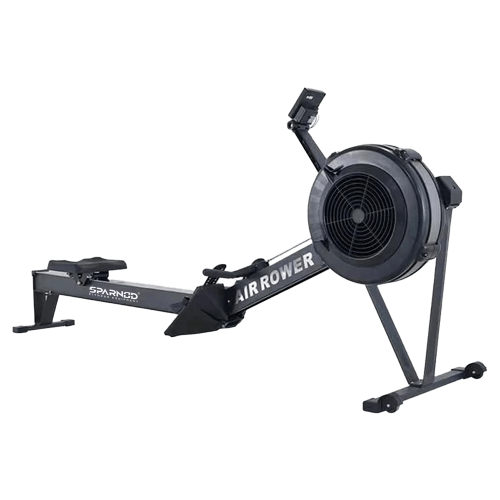 | Gym Equipment's SR-90 COMMERCIAL AIR ROWER EXERCISE MACHINE The SR-90 Commercial Air Rower is a top of the line exercise machine that is perfect for anyone looking to get a great workout in. View product → |
Frequently asked questions
How long should a Pune seasonal air-rower training block run?
Use a four- to twelve-week block. Shorter blocks suit temporary gym programming, while school, club, and tournament preparation blocks need more time for technique and progression.
How should you prescribe air-rower sessions for different users?
Set the session by experience and purpose: beginners need technique-focused work, general users need repeatable conditioning, and tournament athletes need race-paced intervals with planned recovery.
How can a facility run group air-rower sessions without queues?
Stagger work and recovery periods, assign participants to stations, display stroke rate and duration targets, and keep the coach positioned to supervise technique across the group.
What should you check before installing a commercial air rower in Pune?
Check floor space, electrical requirements if applicable, ventilation, noise, storage, cleaning access, user flow, and the supplier’s installation, commissioning, warranty, and service process.