“Three station” does not tell you how many people can train independently, which exercises are available, or how much resistance reaches each handle. By asking for the configuration, load, access, construction, installation, and ownership details below, you can compare an SMG 15000 quotation with the equipment your facility can actually use.
Key takeaways
- Ask the supplier to define every station and identify its independent resistance system.
- Request per-station load details, cable ratios, weight stacks, and usable travel.
- Measure doors, lifts, ceiling height, floor area, and required safety clearances.
- Get installation, maintenance, warranty exclusions, and response times in writing.
What does “three station” mean on this exact multigym?
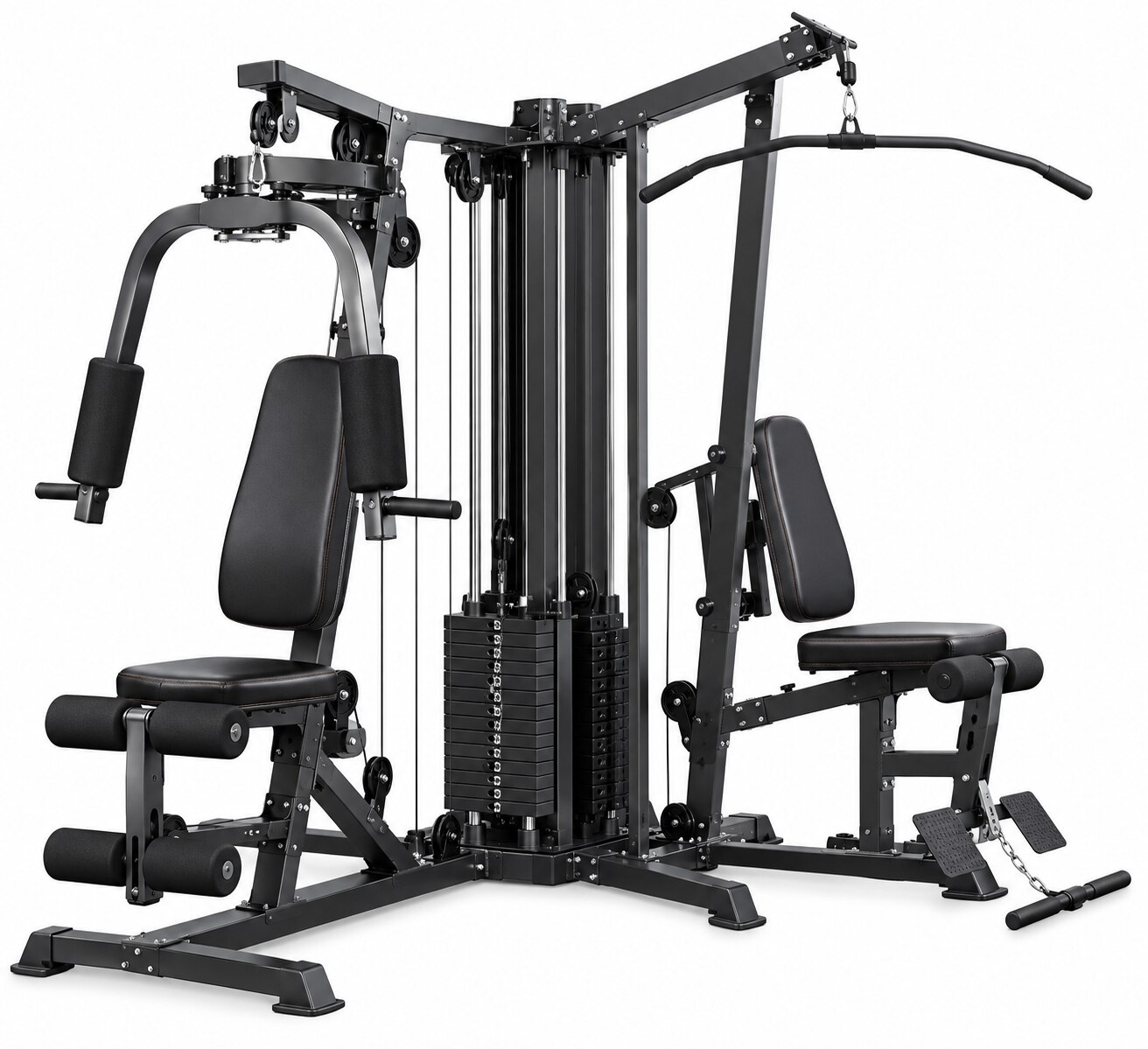
“Three station” can mean three independent user positions, three exercise modules, or a shared configuration with fewer than three resistance systems. Ask the supplier to define the term for the quoted SMG 15000 three station multigym.
| Meaning | What to verify | Risk if unclear |
|---|---|---|
| Independent positions | Three users, each with separate controls and resistance | The frame may not support simultaneous training |
| Exercise modules | Three exercise areas, possibly sharing a stack or cable | Users may compete for one mechanism |
| Shared configuration | Shared seat, pulley, adjustment, or weight stack | The advertised three station gym equipment may deliver fewer usable positions |
Request a model-specific exercise list, not a catalogue photograph. It must name every seat, handle, lever, pulley, and attachment, including:
- Chest press, shoulder press, butterfly or pec-deck
- Lat pulldown, seated row, leg extension, and leg curl
- Low-pulley work, abdominal exercises, and every other quoted movement
Ask whether each station has its own cable, seat, adjustment, and weight stack, or whether two stations share one resistance system. Confirm how many people can train simultaneously, which exercises conflict because users occupy the same side or cable path, and which settings staff must reset.
Request a floor plan showing occupied user positions, handle travel, seat movement, and access routes. Measure usable floor area with all three stations occupied, not only the frame footprint; that reveals whether the unit increases throughput or creates peak-hour congestion.
What resistance and load will each station actually deliver?
Ask for five separate figures for every station: total weight-stack mass, selectable working range, individual plate increment, effective resistance at each handle, and maximum allowable load. Confirm whether the quoted stack includes every plate or only the usable range. A 100-kilogram stack does not automatically deliver 100 kilograms at the handle.
Ask whether the first plate lifts immediately, whether the pin selects fixed increments, and whether fractional plates or a micro-load attachment support beginners and smaller strength increases. Require the pulley ratio for each exercise, such as 1:1 or 2:1, plus cable travel and the method used to verify handle resistance.
Cable routing, pulley position, friction, and attachment point all change the result.
Include these commercial multigym buying questions in the quotation and technical datasheet for the SMG 15000 three station multigym:
- What are the maximum user weight, seat and lever loads, and maximum resistance permitted at each attachment?
- Does the quoted figure describe stack mass, selectable range, or resistance at a particular handle?
- During a demonstration, does the stack pin stay retained through the full movement, including end-of-travel?
- Does movement remain smooth from the first plate to the final plate?
- Can shorter and taller users reach a safe starting position without overextending?
- Does the supplier provide a load or force-test record for each handle rather than relying on “professional” or “commercial” labels?
Reject figures that describe only the stack and omit handle resistance.
Will the multigym fit through the building and work safely in the room?
Get the assembled length, width, height, gross weight, net weight, floor footprint, and clearance around every moving part before approving the room.
Ask a three station multigym supplier in Pune for the SMG 15000’s minimum ceiling height at the high pulley, including the extra height needed to lift, assemble, and service the top frame. Obtain the packed dimensions and weight of every crate or dismantled section.
Compare those figures with your narrowest access point:
| Site point | Check | Failure risk |
|---|---|---|
| Door, lift opening, corridor | Width, height, turning space | Crate cannot enter |
| Staircase turn | Section dimensions and gross weight | Unsafe manual handling |
| Loading bay | Vehicle access and unloading space | Delivery delay or damage |
Confirm delivery to the actual Pune site, the unloading equipment, a site survey, and a written delivery risk plan. Ask whether three station gym equipment needs a protective mat or sports-flooring system, and request the contact load on each foot plus movement during use.
Uneven flooring can rock the frame, misalign cables, and alter seat or lever travel.
Require an anchor layout stating whether anchoring is necessary, where anchors go, and whether slab thickness or wall construction needs approval. Name levelling, assembly, commissioning, user handover, packaging removal, and final inspection as separate installation deliverables.
What proves the frame and mechanisms are suitable for commercial duty?
A “commercial grade” label proves nothing if the supplier cannot state the duty basis, construction, and inspection evidence for the quoted machine.
1. Ask for the frame steel grade or equivalent specification, tube dimensions, maximum allowable user weight at each station, weld inspection process, corrosion-protection system, and powder-coat or paint specification. Require expected daily operating hours, simultaneous users, maximum cable cycles, scheduled service intervals, and written confirmation that the warranty covers commercial rather than residential use.
2. Request cable construction and diameter, end termination, pulley diameter and material, pulley bearing type, cable guards, adjustment points, and inspection and replacement intervals. Obtain written instructions for identifying fraying at terminations, derailment, stretched or poorly tensioned cable, seized bearings, and abnormal noise. These commercial multigym buying questions expose failures hidden by a thick-looking frame.
3. Inspect upholstery thickness, cover material, seam construction, and approved cleaning method. Demonstrate seat-height adjustment, range-of-motion limits, stack-pin retention, safe disengagement where fitted, and access for the shortest and tallest intended users.
For the butterfly press and shoulder press, confirm whether both use one station, how the adjustable knob bolt locks, and how staff verify it visually and physically.
4. If the supplier claims conformity with a stationary training equipment safety standard, request its exact edition, scope, test report or certificate number, and confirmation that it covers the quoted three station gym equipment model and configuration. Reject a generic factory certificate or one covering another configuration.
What will installation, maintenance, warranty, and service cost after handover?
Get one itemised total-cost quotation, not an ex-factory price that leaves site work uncertain. It must show equipment, GST and other taxes, freight to the actual Pune site, unloading, assembly, levelling, anchoring, flooring, staff training, commissioning, annual preventive maintenance, spare parts, and future relocation.
- Request a written Pune maintenance plan covering monsoon humidity, dust, sweat, ventilation, approved and prohibited cleaning chemicals, lubrication points, cable and fastener checks, corrosion inspection, and upholstery care. State the service interval and breakdown response time.
- Demand separate warranty periods and exclusions for the frame, weight plates, cables, pulleys, bearings, upholstery, adjustment mechanisms, and finish. Confirm whether labour, travel within Pune, replacement parts, installation defects, rust, upholstery wear, misuse, and consumables are covered.
- Ask who holds local spare-parts stock and obtain promised response and parts lead times for cable, bearing, and adjustment failures. Include packaging removal and any anchor-layout or slab approval requirements in the installation scope.
- Require a three station multigym supplier in Pune to provide comparable commercial installation references, delivered-site evidence rather than unit counts, technician numbers, typical response times, parts lead times, and a written escalation route.
- When comparing a gym equipment supplier for three station multigym in Pune, ask for model-specific warranty, maintenance, installation, and service documents. Maxx Sportz and Fitness Pvt Ltd belongs in the comparison only if it gives those documents and site-level commitments.
Related product
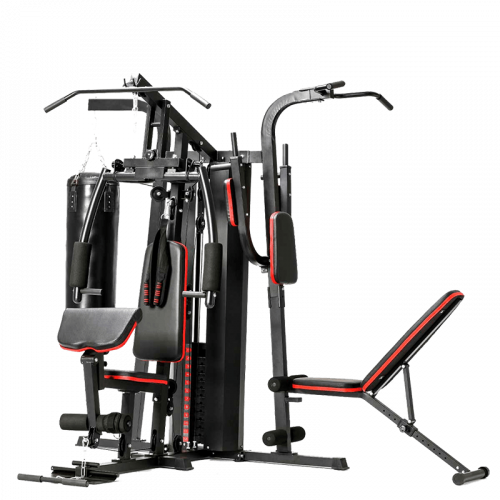 | Gym Equipment's SMG-15000 Three Station Multi-Gym The SMG-15000 Three Station Multi-Gym is the perfect gym for professionals looking for a versatile and high-quality piece of equipment. View product → |
Frequently asked questions
What should “three station” mean on an SMG 15000 multigym?
Ask whether it means three independent user positions, three exercise modules, or three separate resistance systems. Request a labelled layout and a list of exercises for each station.
How do you verify the resistance each multigym station delivers?
Ask for the weight-stack size, maximum selectable load, cable ratio, resistance curve, cable travel, and whether the stated load is stack weight or user-applied resistance.
What site measurements should you confirm before ordering a three station multigym?
Measure the delivery route, door and lift openings, ceiling height, installation footprint, floor condition, and clearance needed for every moving arm, seat, and cable.
What proves a multigym is suitable for commercial duty?
Request the frame material and finish, pulley and bearing specifications, cable rating, adjustment hardware, user-weight limit, duty guidance, inspection schedule, and written warranty terms.
What should a supplier quote for installation and after-sales service?
Get separate costs for delivery, assembly, anchoring, commissioning, staff instruction, preventive maintenance, replacement parts, call-out visits, warranty exclusions, and service response times.